Six strategies for profitable growth Download the free guide

Table of contents
Table of contents
Key takeaways
- ERP solutions for hospitality fall into two categories: industry-specific platforms and configurable systems.
- Hospitality ERP solutions need to integrate with existing systems for property and point-of-sale management.
- The top five reasons to adopt hospitality ERP are: data fragmentation, compliance, cost control, expansion, and improved guest experience.
While ERP systems originated in manufacturing, they are now foundational for multi-entity hospitality groups managing $10M+ in annual revenue. For finance leaders, these platforms replace fragmented spreadsheets with a single source of truth, ensuring financial transparency and automated reporting that aligns with Uniform System of Accounts for the Lodging Industry (USALI) standards.
The financial impact of modernizing these systems is measurable: According to a 2025 study, mid-market organizations deploying Intuit Enterprise Suite are projected to see a 299% ROI over three years, driven largely by data consolidation and reporting efficiencies.
This guide analyzes how hospitality ERP functions at scale, why CFOs at multi-property firms are prioritizing consolidation, and the technical criteria for evaluating a solution’s ability to manage enterprise complexity.
What is ERP for the hospitality industry?
ERP for the hospitality industry is a unified software suite that helps mid- to large-sized multi-property organizations manage their core business functions.
An ideal hospitality ERP centralizes all financial data for consolidated reporting and integrates seamlessly with the operational systems your properties rely on—PMS, POS, and RMS. When your systems are fully connected, you get real-time financial visibility across every entity, reducing manual reconciliation and driving measurable cost savings.
Example: In a hotel group, when your PMS and finance system share data, you can immediately see how occupancy rates affect revenue across properties. You can then correlate daily POS sales with cash flow performance without waiting for month-end reconciliation.
Most common modules integrated by a hospitality ERP
Hospitality ERP solutions are purpose-built around the operational and financial complexity of multi-property organizations.
Some of the core modules include:
- Financial management: Ensures USALI compliance, standardized general ledgers, and automated consolidated reporting across entities.
- Property management (PMS): Integrates daily operational data (reservations, room status) for real-time revenue and expense recognition.
- Point-of-sale (POS) system: Links real-time sales data from venues directly to the general ledger for an immediate view of daily revenue and cash flow.
- Human resources: Handles multi-location payroll and links scheduling data to departmental costs for precise labor margin analysis.
- Inventory management: Tracks food, beverages, and amenities, providing real-time costing data essential for optimizing procurement and controlling margins.
- Customer relationship management (CRM): Centralizes guest data to calculate customer lifetime value and improve forecasting accuracy.
The modules used in an ERP will vary depending on your organization’s operating model and property portfolio. For instance, a resort would benefit from the property management module, whereas a restaurant chain may get greater use out of a POS or procurement module.

5 reasons you need an ERP in hospitality
Whether you’re automating intercompany eliminations or protecting margins against rising operational costs, here are the top five ERP benefits for your hospitality business.

1. Stop fragmenting financial data
When financial data is scattered across disconnected systems and legacy platforms, you lack the deep visibility needed to manage performance across properties.
A hospitality ERP consolidates that data into a single source of truth, eliminating the manual reconciliation that slows down decision-making. Say you're evaluating whether to exit an underperforming market or reinvest in a high-margin property. With unified data across your portfolio, you can correlate RevPAR trends, labor costs, and entity-level profitability in real time and make that call with confidence.
2. Mandate USALI compliance
For multi-entity hotel, motel, and resort groups, compliance with the Uniform System of Accounts for the Lodging Industry (USALI) requires standardizing departmental operating statements, payroll expense allocations, and balance sheet classifications to ensure financial comparability across properties.
The recently released 12th edition added requirements for energy and sustainability tracking, including utility consumption by department, carbon emissions reporting, and waste management costs. With the hospitality industry accounting for 40% of global greenhouse gas emissions, these requirements will only expand. Keeping pace manually isn't realistic, and an ERP automates the data capture and classification needed to stay compliant as standards evolve.
Without an ERP system, your teams must enter data manually and manually assign classifications to each transaction. This ultimately delays and undermines decision-making. In an ERP system, transactions are automatically entered into the ledger and classified appropriately. And income statements are generated automatically—audit-ready, without the manual effort.
3. Control rising operational and labor costs
Labor and operational costs are perpetually on the rise. Increased rent, inflation, and changes to minimum wage all put sustained pressure on your margins across every entity. This makes precise, real-time data obtained through an ERP essential for cash flow and sustained profitability.
Let's say you're a multi-entity hotel group battling increased supplier costs and labor changes across dozens of locations. With an ERP system, you gain the consolidated visibility necessary to control these costs at scale.
The system helps the group to:
- Track utilization across multiple venues for optimal labor efficiency.
- Forecast inventory needs centrally, negotiate bulk discounts, and reduce waste across the entire portfolio of locations.
- Gain a real-time picture of all expenses and profits consolidated across every entity, allowing for rapid intervention to protect margins.

According to the U.S. Bureau of Labor Statistics, employment costs increased by 3.6% from July 2024 through June 2025.
4. Address scalability limitations
Growth is the goal of many businesses, but your ability to scale can be limited by your ability to accurately manage your books. Even if you have basic accounting software, it may not be enough to handle the complexities of multi-property operations, multi-user access, and high transaction volumes.
A recent QuickBooks Business Solutions Survey showed that 98% of respondents said the current software couldn’t handle their planned growth. If you agree, it may be time to switch to a hospitality industry-tailored ERP. The modular design of an ERP means you can add to or customize it as needed. Plus, with access to real-time data, you can make informed decisions regarding your expansion plan.
5. Optimize the guest experience through efficiency
Operational efficiency is the primary driver of Customer Lifetime Value (CLV) and operating margins. In the hospitality sector, service disruptions like room delays or staffing gaps are more than branding issues—they represent direct revenue leakage and unnecessary service recovery costs.
A hospitality ERP connects data and workflows across departments, reducing the errors and delays that pull staff away from guest service. This can help enhance customer satisfaction and build loyalty. And loyalty is everything, with 50% of industry leaders planning on investing in their loyalty programs in 2025.
Let’s look at a hotel group as an example. With an ERP system, staffing, reservations, and procurement data are coordinated across departments—allowing teams to anticipate demand and operate more efficiently across properties.

3 popular integrated hospitality ERP solutions
The worldwide ERP market is expanding rapidly, with Grand View Research projecting it will reach $157 billion by 2033. Reflecting this growth, the three most popular ERP brands in the hospitality sector are NetSuite, SAP, and M3 Hotel Accounting. Which one is best for you will depend on your business size, model, and vertical.
For hospitality, it's important to evaluate options based on their depth of PMS/POS integration, the efficiency of their multi-entity reporting, and the total complexity of implementation required to achieve ROI.

NetSuite
Advertised as a tailored solution for hotels, resorts, restaurants, and venues, Oracle’s NetSuite Hospitality is best for mid-market businesses. The system automates accounting processes, integrates inventory demand forecasts, and provides dashboards with real-time data.
One of the key features NetSuite Hospitality is known for is its global operations management. Users get support for multiple locations, currencies, and languages. Plus, the ERP system is designed to adhere to all local laws and compliance standards.
The tradeoff is implementation complexity and cost. NetSuite typically requires significant customization to fit hospitality-specific workflows, demanding substantial IT resources and time, making it a heavy lift for organizations without dedicated technical teams.
SAP
The SAP ERP system is largely modular. While there is no dedicated hospitality product, you can customize your ERP solution with a wide range of modules and features. This build–it-your-way approach is ideal for larger enterprises.
The system is most often used by large hotel chains that require deep integration across multiple international business units and extensive regulatory compliance capabilities. In fact, SAP is advertised as supporting 80% of the world’s top hotel groups.
However, SAP’s flexibility comes with added complexity—implementations can be lengthy, costly, and require specialized expertise to manage effectively.
M3 hotel accounting
A dedicated solution, M3 offers accounting software to hotel brands around the world. Their system comes packed with hotel-specific features like multi-property support, audit readiness, and hotel tax reporting. Plus, it integrates with 70+ hospitality systems like PMS, POS, and payroll platforms.
M3’s hotel ERP also offers labor management software, allowing you to track employee hours and align labor scheduling with their occupancy. Focusing on business intelligence, M3 offers a module called Insight with forecasting tools and custom dashboards.
As a specialized solution, M3 may require additional integrations to support broader operational needs beyond accounting, which can add complexity as your tech stack grows.

The most effective ERP for your hospitality organization is one you can tailor to how your properties actually operate. Industry-specific customization gives you the reporting structures, KPIs, and integrations that match your workflows out of the box, so your team spends less time configuring and more time using the data to drive decisions.
How Intuit Enterprise delivers hospitality solutions
Intuit Enterprise Suite is an AI-native ERP that makes enterprise-grade financial management accessible to mid-market multi-property hospitality organizations.
With built-in accounting and advanced reporting, you can standardize financial data across properties, support audit readiness, and maintain compliance with frameworks like USALI. Integrated payroll also helps ensure taxes are calculated accurately and payments are processed on time, reducing administrative overhead.

In addition to the accounting features, Intuit Enterprise Suite offers tools for managing your inventory, orders, and reports. A recent Business Solutions Survey found that the average business uses 10 apps, with a monthly cost of $10,000. Consolidating those workflows into a single platform reduces that cost burden and gives your finance team a consistent, reliable view of performance across every property.
And if you do need to use outside tools like PMS and POS, Intuit Enterprise offers a robust API framework and the QuickBooks Solution Provider network to ensure real-time data flow.
Whether you're managing a multi-property hotel group, a restaurant chain, or a diversified hospitality portfolio, IES gives you the financial infrastructure to scale with confidence.

When you schedule a demo, you agree to permit Intuit to use the information provided to contact you about Intuit Enterprise Suite and other related Intuit products and services. Your information will be processed as described in our Global Privacy Statement.
Boost productivity and enhance profitability
As your portfolio grows, so does the complexity of managing financial data across entities. The right ERP helps finance teams maintain control at scale by reducing reconciliation effort, improving reporting consistency, and enabling faster, more informed decisions.
Intuit Enterprise Suite is built just for that, connecting accounting, financial operations, and integrations into a single system so your team can focus less on managing systems and more on optimizing performance across properties.
Check out upcoming events and learn more about Intuit Enterprise Suite.
Customer stories

Case study
How FEFA Financial scaled up with Intuit Enterprise Suite (No ERP migration needed)

Case study
Case study: Fire & Ice transforms multi-entity challenges with Intuit Enterprise
October 25, 2024

Case study
Four Points RV Resorts review: Why they chose Intuit Enterprise Suite over NetSuite
October 25, 2024

Construction
Migrating to Intuit Enterprise Suite took 2 hours (with zero disruption) for this aspiring $50M revenue business
April 25, 2025
Case study
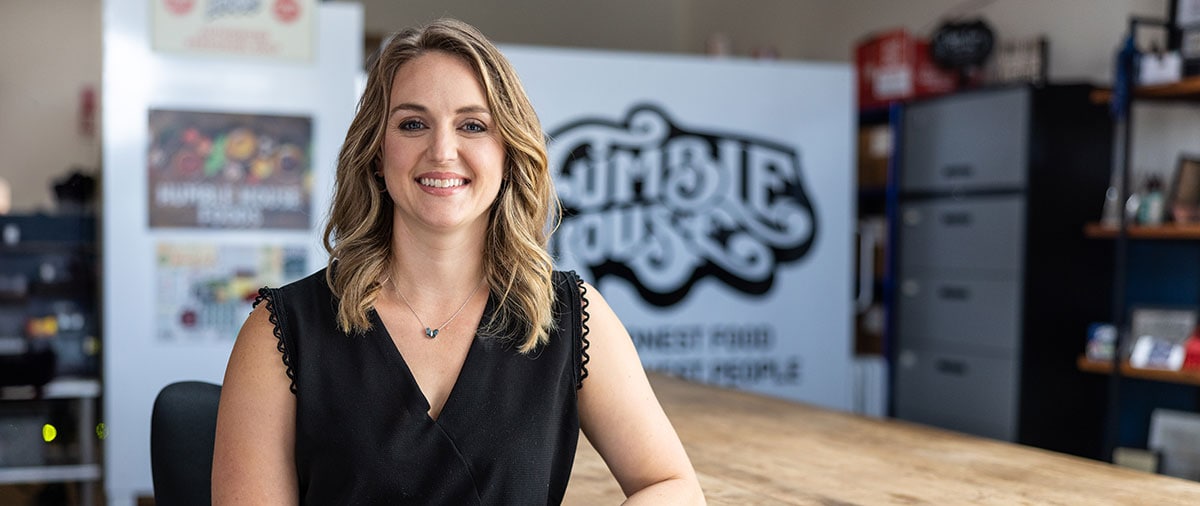
Humble House Foods case study: How they improved visibility & simplicity using Intuit Enterprise Suite
September 24, 2025
More product updates

Product update
What’s new in Intuit Enterprise Suite spring 2025
April 1, 2025

Product update
Intuit Enterprise Suite 2025 update: AI agents & automation enhancements
July 22, 2025

Product update
What’s new in Intuit Enterprise Suite November 2025: The AI-native ERP that adapts with your business
November 14, 2025