Table of contents
Table of contents
What is an ERP consultant? An ERP consultant helps businesses select, implement, and optimize enterprise resource planning (ERP) systems. They assess business needs, streamline processes, and offer ongoing technical support to ensure the system improves efficiency and productivity.
ERP systems can improve your efficiency, but implementing them is no small feat. You can use the expertise of an ERP consultant to help ease the process. An ERP consultant guides companies through every phase of the ERP process, from initial planning and system selection to customization, integration, and ongoing support. For example, Intuit Enterprise Suite has a built-in consultation to ensure the product is the right fit for your business and the best way to implement it.
Alternatively, you can bring in your own consultant. Find out the key indicators that signal it’s time for expert intervention.
What is the role of an ERP consultant?
An ERP specialist plays a multifaceted role, acting as the bridge between your organization and the ERP system, ensuring the solution aligns perfectly with your business needs. Here’s a closer look at their key responsibilities.

System analysis and needs assessment
An ERP consultant starts by thoroughly analyzing your existing systems and processes. They’ll conduct a needs assessment, evaluating where inefficiencies exist, identifying opportunities for improvement, and determining which ERP features are most crucial for your business.
This tailored approach ensures that the ERP solution can address your specific operational and financial goals.
Implementation planning and execution
After selecting the right ERP system, the consultant develops a comprehensive implementation plan. This involves mapping out the timeline, resources, and milestones for each phase of the ERP rollout.
The consultant oversees the entire process, from software configuration to data migration, ensuring minimal disruption to daily operations and a smooth transition.
User training and support
One of the most critical roles of an ERP implementation consultant is training your team to use the new system effectively. They provide customized training programs to different user groups, ensuring employees across all departments can leverage the ERP to its full potential.
Beyond initial training, consultants offer ongoing support to address user challenges and ensure the system is adopted seamlessly.
 With Intuit Enterprise Suite, as part of your onboarding process, you are provided with dedicated support from an account manager and customer service.
Technical support and maintenance
Even after implementation, the ERP journey doesn’t end. ERP specialists provide technical support and system maintenance, ensuring your ERP solution continues to operate efficiently. They handle system updates, troubleshoot technical issues, and offer guidance on optimizing the system as your business evolves.
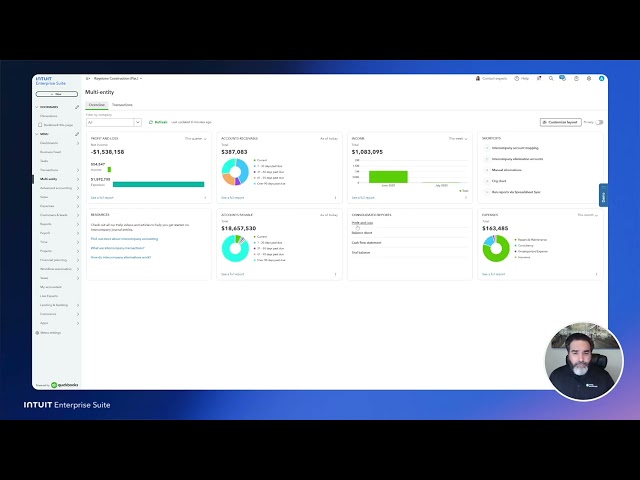
Project management and coordination
ERP implementations often involve multiple departments and stakeholders. A consultant acts as a project manager, coordinating between teams, managing resources, and keeping the project on track. This ensures that every aspect of the implementation is aligned with your business objectives and timelines, ultimately driving a successful ERP deployment.
In short, ERP implementation consultants bring structure, expertise, and efficiency to the table, making sure your ERP system delivers the value your business needs.
 Don’t overlook how a potential ERP consultant fits into the company culture. Beyond technical expertise, someone who aligns with your company’s values and communication style can significantly improve collaboration and ensure smoother adoption of new processes.
Why you might need to hire an ERP consultant
Implementing an ERP system is no small task, and it’s easy to encounter challenges along the way. Whether you're adopting a cloud ERP solution or dealing with the complexities of multi-entity accounting, hiring an ERP consultant can be the key to a successful rollout.
Here are a few reasons why bringing in an expert might be the best move for your business:
- Lack of internal expertise: Your team may not have the specialized knowledge needed to manage a complex ERP implementation, especially with advanced systems like cloud ERP.
- Complex business processes: If your company handles intricate processes or multi-entity accounting, a consultant can ensure the ERP system aligns with these specific needs.
- Time constraints: An ERP consultant helps streamline the implementation process, allowing your team to stay focused on core business functions.
- Avoiding costly mistakes: Expert consultants minimize errors during setup, reducing the risk of expensive delays or disruptions.
- Ensuring long-term success: Beyond implementation, ERP consultants offer ongoing support and maintenance to keep the system efficient as your business grows.
- Overcoming technical hurdles: They handle challenges like data migration, system integration, and troubleshooting—areas where businesses often struggle without expert help.
Also, specialists can help tailor the ERP system to your unique requirements, ensuring that every module functions optimally for your business. An ERP system with advanced AI analytics capabilities can simplify operations to a great extent.

When you schedule a demo, you agree to permit Intuit to use the information provided to contact you about Intuit Enterprise Suite and other related Intuit products and services. Your information will be processed as described in our Global Privacy Statement.
The benefits of hiring an ERP consultant
Bringing in an ERP consultant offers a wide range of advantages that go beyond a smoother implementation. Here's how hiring a consultant can positively impact your business:
- Improved efficiency and productivity: Streamlines workflows, automates tasks, and boosts productivity, positively impacting key metrics like gross margin
- Enhanced data management and reporting: Optimizes data accuracy, improving reporting and decision-making with real-time insights, including metrics like net operating profit after tax (NOPAT)
- Streamlined business processes: Aligns ERP with your business needs, simplifying complex operations like inventory management and multi-entity accounting
- Cost savings and ROI: Prevents costly mistakes, reduces downtime, and maximizes ROI by ensuring the ERP system delivers tangible business value
Hiring an ERP consultant can increase scalability and flexibility since they can optimize your ERP system for future growth, ensuring it can adapt as your business expands or evolves. These benefits can come when you modernize your ERP system.
Set clear goals for what you want to achieve, whether it’s improving efficiency, boosting gross margin, or enhancing data reporting. This helps the consultant focus on delivering measurable results and a solid ROI.
How to pick the right ERP consultant
Choosing the right ERP consultant can make or break your implementation. Here’s what you should do to ensure success:
- Consider industry expertise and experience: Look for a consultant who understands the unique challenges of your industry, whether it's project-based accounting, manufacturing, or retail. Their familiarity with your business model will help them tailor the ERP solution to your needs.
- Assess project management capabilities: Your consultant should excel at handling complex projects from start to finish. Strong project management skills ensure that timelines, resources, and deliverables are well-coordinated, minimizing disruptions to your business.
- Look at communication and interpersonal skills: Clear communication is key to a successful partnership. Choose a consultant who can explain complex ERP concepts in simple terms and collaborate effectively with your internal teams.
- Ask for their technical skills and certifications: Ensure the consultant has up-to-date certifications and a solid grasp of ERP systems, especially in specialized areas like workforce automation. Their technical expertise is critical for integrating and optimizing the right features.
You’ll also want to look at their references or read testimonials from previous clients. This can give you insight into the consultant’s track record, reliability, and ability to deliver results similar to what you're aiming for.

The ERP consulting process
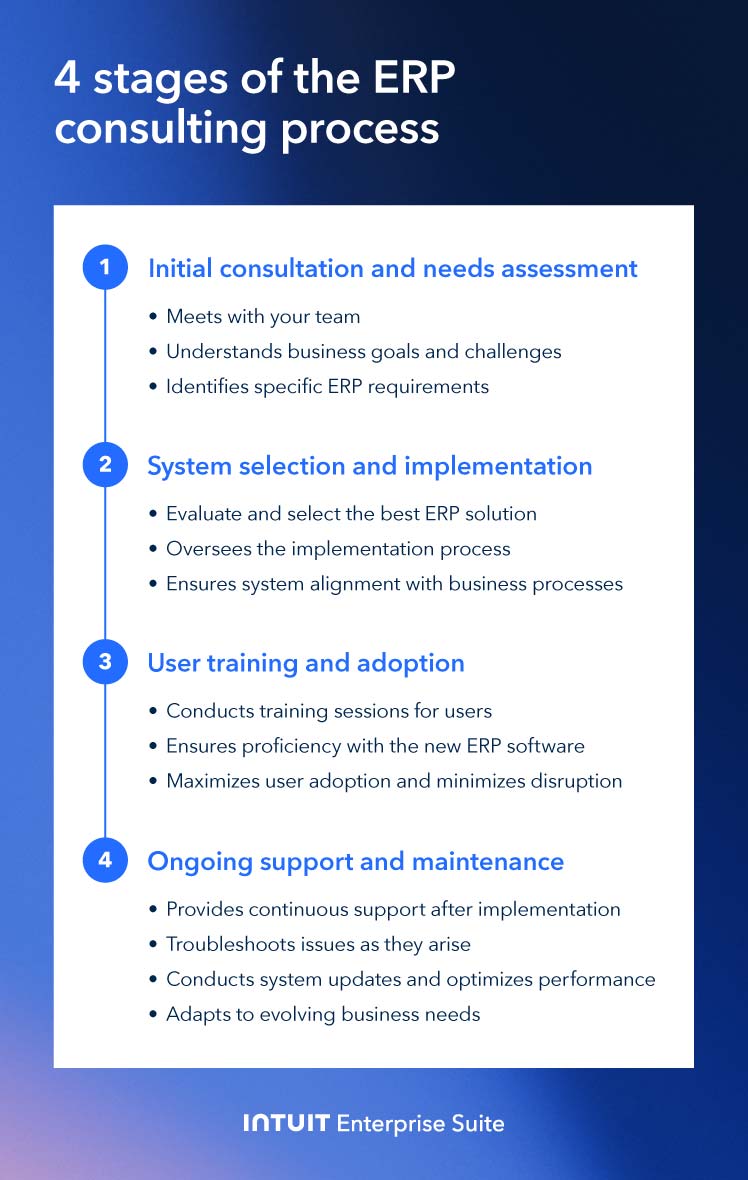
Understanding the stages of the ERP consulting process can help you hire the right person. When interviewing, ask them about all these stages to ensure they know how it’s done.
1. Initial consultation and needs assessment
Consultants meet with your team to understand your business goals, current challenges, and specific ERP system requirements. This helps identify the best solutions tailored to your needs.
2. System selection and implementation
After assessing your needs, the consultant helps you select the most suitable ERP solution. They oversee the implementation process, ensuring the system is set up correctly and aligned with your business processes.
3. User training and adoption
Once the system is in place, the consultant conducts employee training sessions to ensure users are comfortable and proficient with the new ERP software. This step is crucial for maximizing user adoption and minimizing disruption.
4. Ongoing support and maintenance
Post-implementation, the consultant provides continuous support and maintenance. This includes troubleshooting issues, conducting system updates, and optimizing performance to adapt to your business's evolving needs.
Boosting productivity and profitability for growing businesses
By streamlining processes, improving data management, and providing ongoing support, an ERP consultant helps you navigate the complexities of your expanding operations—and ultimately helps you choose the right ERP software like Intuit Enterprise Suite.
ERP consultant FAQ
Check out upcoming events and learn more about Intuit Enterprise Suite.

Customer stories

Case Study
How FEFA Financial is growing with Intuit Enterprise Suite—without migrating to an ERP

Case Study
How this mission-driven, employee-owned company created efficiencies with Intuit Enterprise Suite
October 25, 2024

Case Study
Why this camping business chose Intuit Enterprise Suite over NetSuite
October 25, 2024

Case Study
Migrating to Intuit Enterprise Suite took 2 hours (with zero disruption) for this aspiring $50M revenue business
April 25, 2025

Case Study
Humble House Foods case study: How they improved visibility & simplicity using Intuit Enterprise Suite
September 24, 2025
More on ERPs

Guide
Data analytics: How AI-driven ERP data analytics reveal blind spots & align resources for growth

ERP
ERP implementation: From spreadsheets to an integrated & scalable ERP system
May 27, 2025

ERP
7 advantages of an ERP system every exec & business owner should know
November 22, 2024

ERP
AI in ERP: Unifying data using intelligent automation
October 14, 2025